You press the flush button on the toilet, you have showers and let water run down the sink, where does it all go and how does it get there? In Australia, there are 300000kms of water and wastewater pipes, enough to wrap around the earth 6 times. And of course, the world’s population is growing, but our sewage pipes can’t magically grow with us, and so our pipes will soon be clogged and wastewater treatment plants will be unable to handle all the literal crap (see my previous blog post if you’d like to know more about constituents in wastewater). In Western Australia, the Water Corporation operates over 100 wastewater treatment plants through advanced treatment processes and investments into plant upgrades. With an increasing population, there will be a point where the current infrastructure is unable to handle the waste produced. A large amount of energy is also required to operate these wastewater treatment plants, and the water industry really needs come up with new and innovative solutions to stay on top of it. As the effects of sewage on the environment are largely negative, the world must act now to prevent further issues from arising.
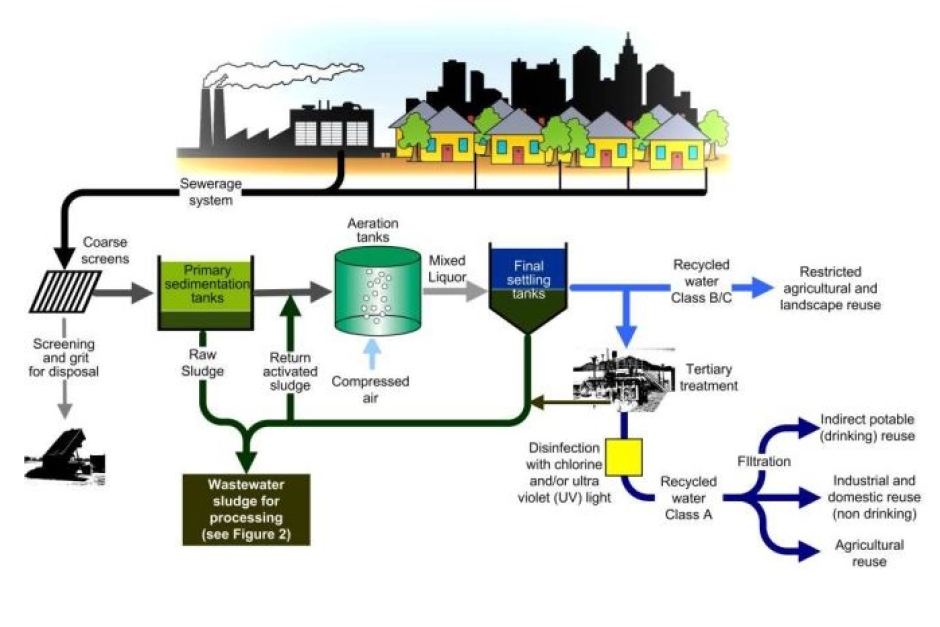
The role of wastewater treatment plants has changed recently, with resource recovery becoming essential in order to produce recycled water, biosolids and biogas. Recycled water is treated wastewater used for things like sports ground irrigation and toilet flushing (for more wastewater uses check out this Youtube video from the Water Corp). Biosolids are treated sewage sludges which can be used for land rehabilitation and composting, and biogas is a form of renewable energy composed of different gases, which can be converted to electricity and heat. In fact, SA Water has turned their largest wastewater treatment plant to be 87% energy self-sufficient, due to biogas production from biosolids, by investing money to connect new infrastructure, which is a good measure to reduce the amount of energy required to treat such water, and would be a great idea to adopt nationwide to reduce energy usage required to treat wastewater. The treatment process is quite rigorous, as you can see in the diagram below. The idea of using renewable energy such as solar, hydroelectric power and biogas to run wastewater treatment plants is a great idea to reduce carbon emissions due to the high-energy wastewater treatment process, with solar already being implemented in many plants. Using hydroelectric power to generate electricity to work the wastewater treatment plants would also be a great solution.
As for sewers being blocked and unable to handle the sludge going through, there are definitely some innovative solutions that need to be looked at (and may currently be overlooked due to the water monopoly). On a household scale, each household produces grey water and black water, and are separated as they required different levels of treatment. Grey water comes from sinks, washing machines and bathtubs, whereas black water includes the three P’s (see the previous blog post for reference). For future housing developments (and ignoring generated costs), I think a good idea would be to have a small wastewater treatment plant for each estate of houses (if you look into newer suburbs like Canning Vale, houses are grouped by small estates). Then the wastewater would not be required to spend as much time in transit, and could be treated quickly and efficiently (for sewage only), minimising blockages and issues with sewage infrastructure. Grey water produced by these households could be reused for purposes such as flushing toilets and garden irrigation, but not without clear education to homeowners first. This education includes telling people not to let things like food or hair wash down the sink, and if people have to reuse their own grey water, then it is highly probable that they will be much more cautious about what goes down, as it will definitely come back around.
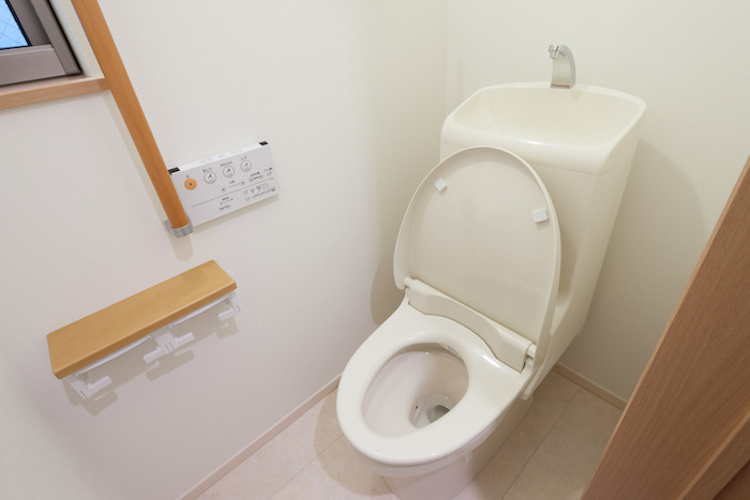
One thing I’ve witnessed with my own eyes which could be a good idea to adopt in households was something I saw whilst on exchange in Japan. They have sinks built into their toilets in many homes (see picture below for reference), which run with clean water for you to wash your hands after you flush the toilet, and this water you’ve washed your hands with is then used to flush the toilet the next time around. Smart right?
Little measures like these will reduce the amount of wastewater used, and hence reduce any issues with blockages in the sewage system. I think there needs to be a new way of thinking, and water companies should be looking at the world from different scales to determine better ways to do things to prevent any blockages in the infrastructure and to also reduce the amount of energy used in wastewater treatment plants, planning ahead for population growth, and is completely in line with the UN’s Sustainable Development Goals, particularly number 9 to build resilient infrastructure, promote inclusive and sustainable industrialisation and foster innovation. By 2030, the aim is to retrofit structures to make them sustainable and that there is greater efficiency, which could be done using renewable energy. Innovation will always have a big role to play and it will be how our water industry maintains itself and its infrastructure way into the future, and not to brag, but I think I made some good suggestions above.
And one last thing. EDUCATION. We need to educate our world to reduce this stigma of using either treated wastewater or even just recycled grey water. There is definitely a lack of understanding about how high the quality of the water is after treatment and I think it starts with the government, and spending some money on ads to educate the population. Ads actually really stick with people, which I can say is true for myself, as Aussie ads pop into my head all the time and I reference them in conversation. Maybe a new catchy tagline is the trick?
#dirtytalkforthegreatergood
 There's Something in the Water