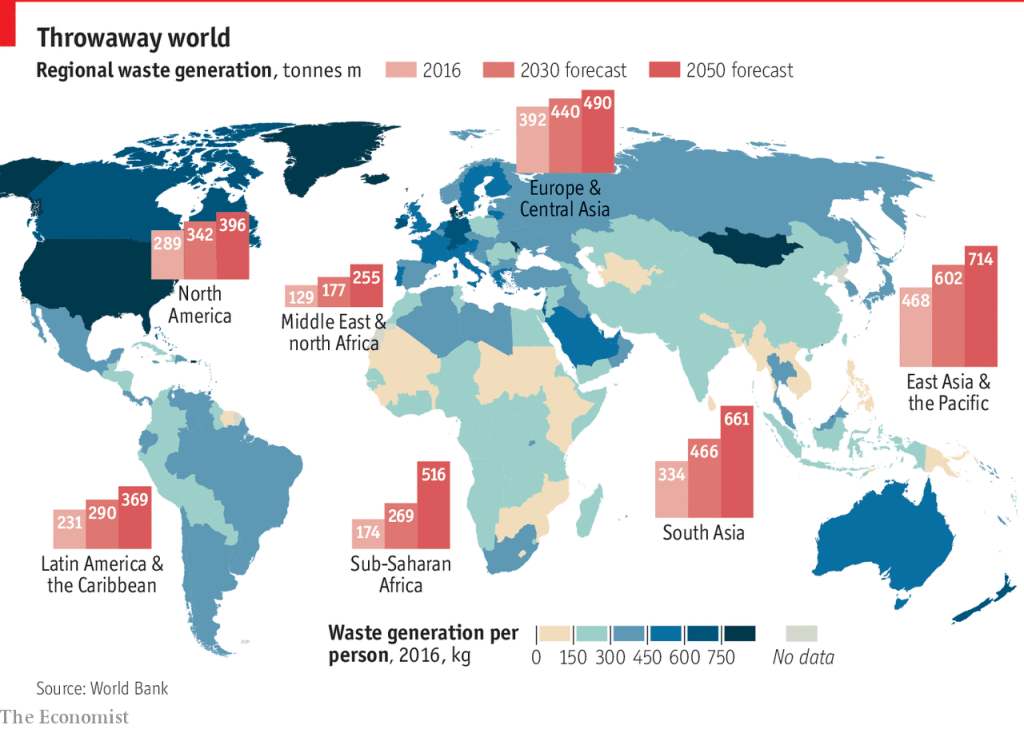
So, in doing some research for this week’s blog, I found some very disturbing facts about our trash. Australia is actually one of the highest producers of waste (per person) in the world, and each year the average Australian family makes enough trash to fill their home. It seems that the first world countries generate more trash per head than the developing countries, probably due to advancements in technology and the current culture of “let’s replace something perfectly new with the next biggest thing”, which is definitely evident in the smartphone industry. I have definitely been guilty of doing this. Waste is fast becoming one of the biggest problems we are facing in modern day society and it can’t just disappear into thin air, so we are having to look into more solutions to manage this carefully. Richer countries and their advanced economies make up 16% of the world’s population but produce 34% of the world’s rubbish. Something is clearly not right about that number.
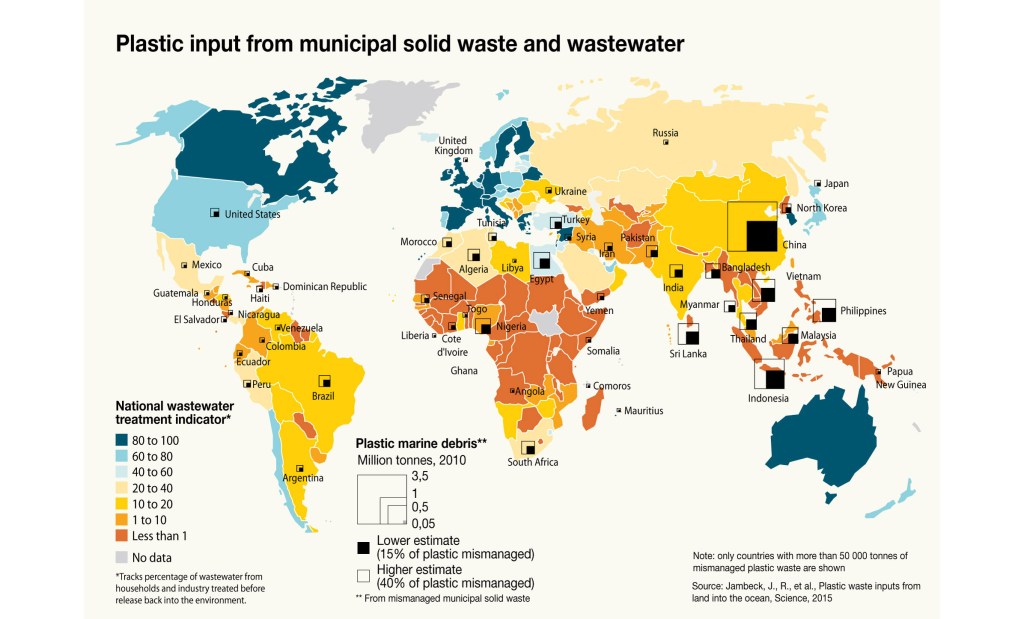
wastewater because it might be easier to just flush it away, and if you read last week’s blog post, you’ll know 80% of global wastewater flows back into the ecosystem without being treated at all. If we are disposing of our waste ethically, it contributes to the UN’s Sustainable Development Goals. Less waste means an overall improved health and well-being (SDG 3), cleaner water and sanitation as less waste will find its ways into our water (SDG 6), a greater focus on climate action to reduce gases like methane (SDG 13) and if we can recycle as much as possible, we are being responsible and heading towards more of a recyclable world with a circular economy (SDG 12), where overall there is much less waste produced and hence less to be disposed of.
So what is currently being done to handle the issue? Time to take a look at the social side.
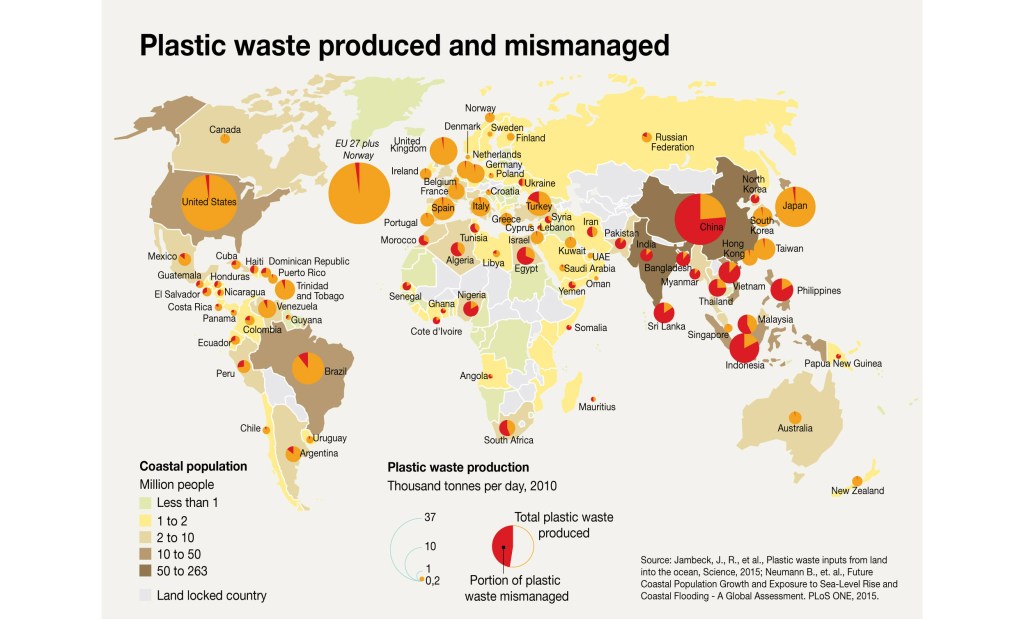
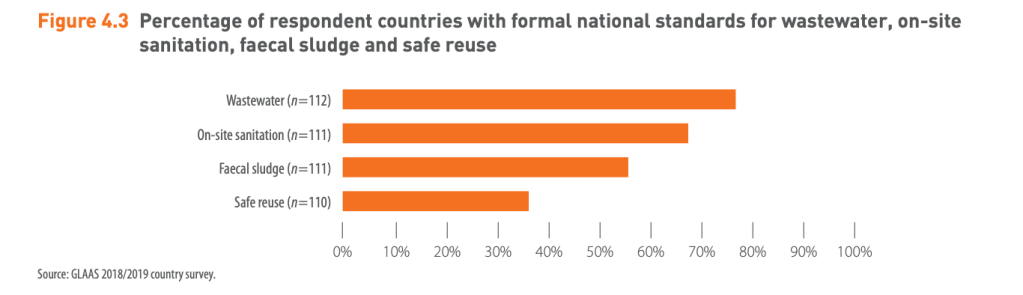
Recycling. This is something we’re taught about in school from a young age, don’t throw food in the recycle bin, paper and cardboard only, blah blah blah (Technology and Environment from back when I was in school). If all kids have learnt this clearly, then we don’t have an issue and we’ve caught the problem from the very start, but there seems to be a huge confusion. The amount of mismanaged waste in the world is a massive problem. Take a look at this diagram.
Some Perth councils have now changed to three bins in an effort to consciously recycle more compost/food waste, which some people have been struggling transitioning to. From what I can gather, people aren’t too sure on what goes where, and I also have no idea because I’m still living in a council with two bins. Where are the ads for clarification? We all constantly hear government ads talking about the negative harmful effects from smoking, but why is nobody talking about all the waste produced and its environmental impact?
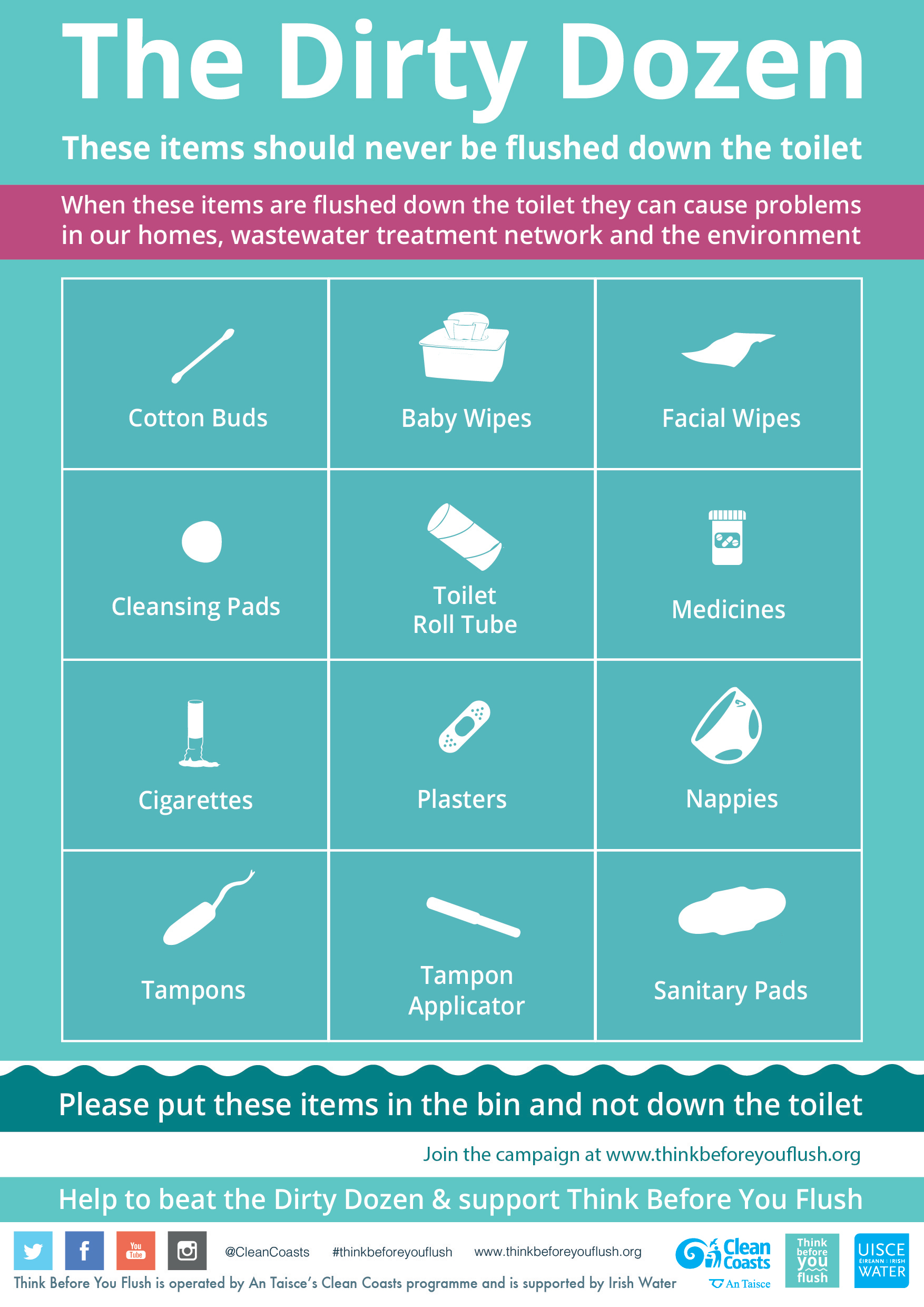
But pushing the issue of recycling aside. What about the products that can’t be recycled at all? There are a fair few on the list, but I want to focus on feminine sanitary products, like tampons and pads. It’s sort of a supermarket staple, just like toilet paper. After talking about who gives a crap (link) in class this week, I was curious about all-natural, possibly biodegradable sanitary products and did a quick google to see if they did. I found several brands, including Tsuno and Bamboo Babe. So it’s not that they don’t exist, there just hasn’t been enough awareness and marketing around them to affect enough people.
So from a general point of view, I see two issues. Number one being the social stigma around talking about feminine sanitary products and hygiene and also just waste in general, and number two being the lack of awareness around the composition of the products themselves that can be harmful to your body and the environment.
So, as for social stigma. There’s always been a general attitude of ‘just don’t talk about it’, because blood, clots and other gross stuff. But it’s perfectly normal, and healthy, so I think we can address this fairly easily. Social media influencers are a big part of today’s society, with Youtube as big as it is, and it’s a wonder that influencers aren’t talking about being environmentally friendly in the feminine sanitary product department for some brownie points with their audiences. Also in sex-ed and school, guys and girls are separated to learn about guy and girl things, so that’s probably why guys are a little afraid of periods. If we could be a lot more open with our health education and get everyone to talk freely about it, it wouldn’t be so taboo.
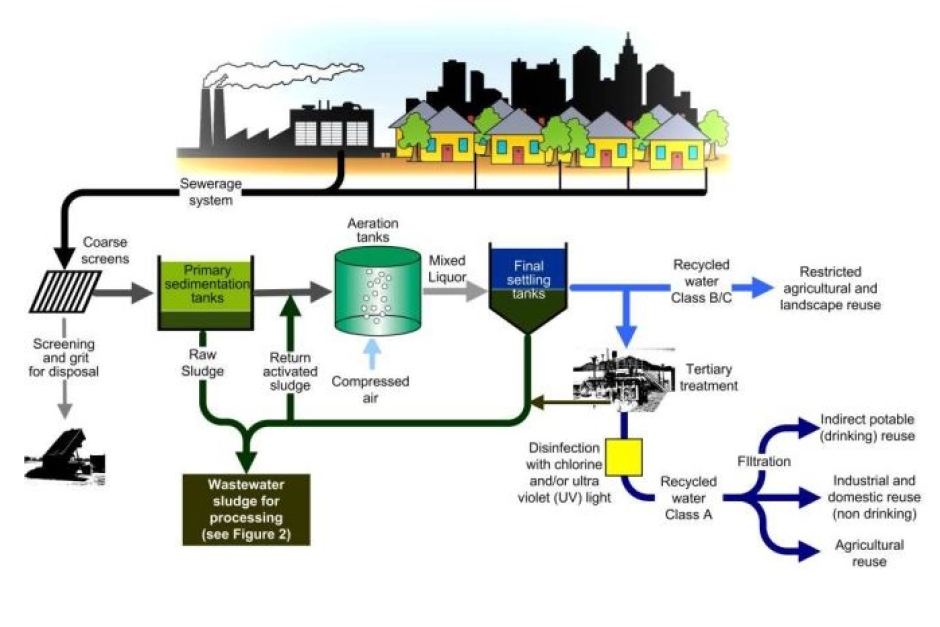
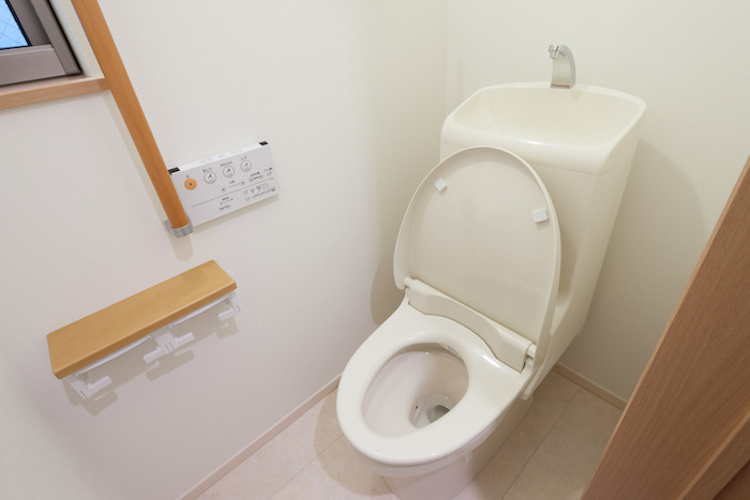
So now the issue of lack of awareness and marketing. I’m surprised I haven’t heard about such environmentally friendly biodegradable pads/tampons before, considering the ease of marketing with the social media age nowadays. Clever social media campaigns, like who gives a crap, have definitely played a major influence on the toilet paper industry, so why can’t the same be done for the sanitary product industry? I think it really does make a huge difference, because if we all start using biodegradable pads and tampons, we have less waste in general, and accidentally flushing one down the toilet wouldn’t be as big of an issue (though you still shouldn’t do it), and we end up with less solids in our wastewater and therefore a less energy-intensive wastewater treatment process. And an overall happier and environmentally friendly world, to ensure clean water for everyone (SDG 6), more sustainable cities and communities because there is less waste (SDG 11), and an overall responsible consumption and production (SDG 12). Time to talk trash and blood!
#bloodyhell #talkingtrash #cleanmindcleanenvironment
 There's Something in the Water