Have you ever wondered, ‘Where does our water come from?’ Well of course we all have, but the question that nobody really asks is ‘Where does our used water go?’ Personally, I haven’t ever really considered where our wastewater ends up. Why should I care, if I’m not the one to deal with it? This is the standard attitude for most people (including myself until recently) regarding wastewater: out of sight, out of mind, and in this case, flush and forget. It wasn’t until recently that I’ve realised what the big deal actually is. So now it’s time to ask yourself, why should you care about our water and wastewater?
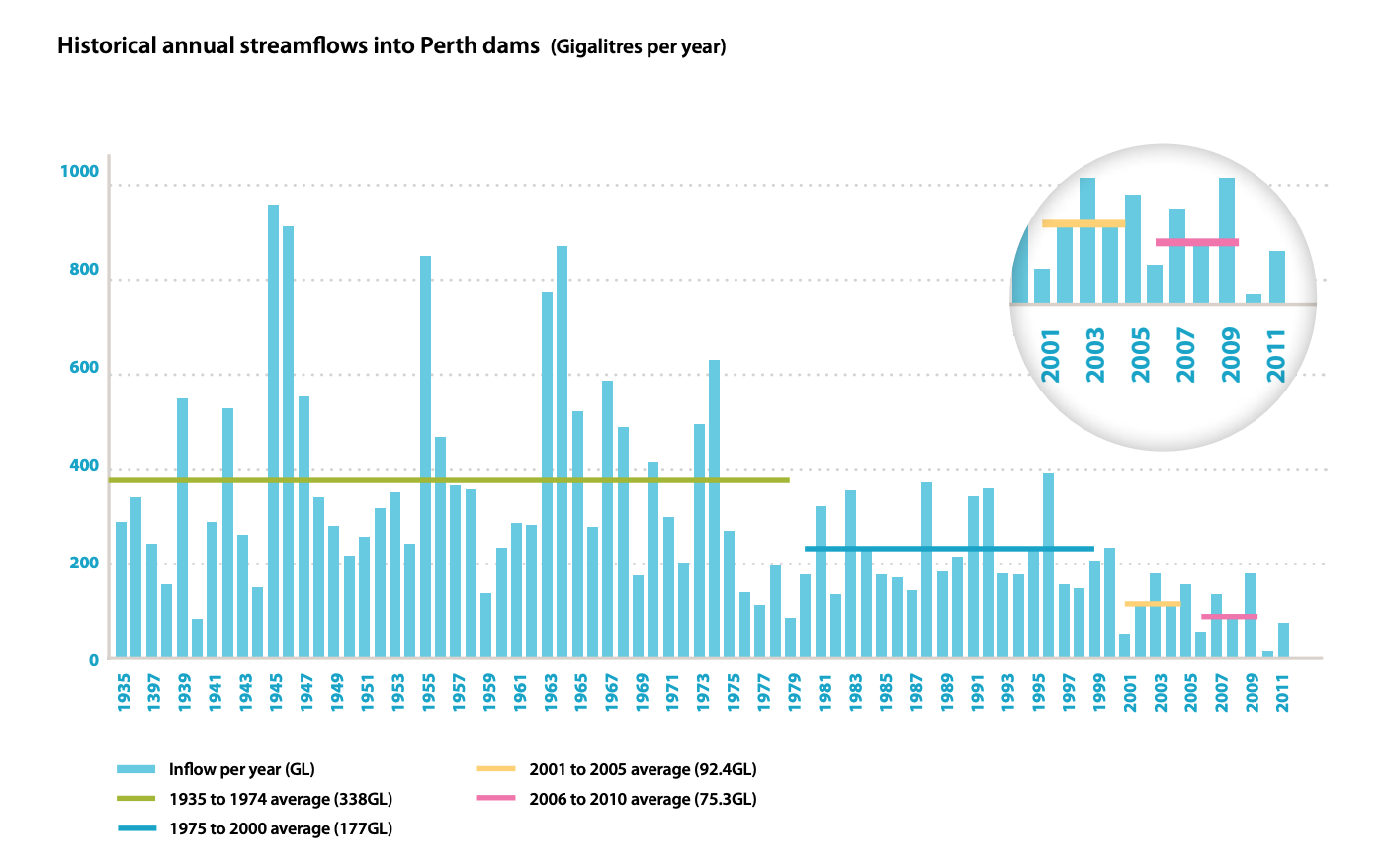
Well for a start, the increase in population and climate change happening are causing our water supplies to decrease. In the past, the majority of Perth’s water was sourced from our dams, which has changed significantly over the past 10 years, shown in the graph below. It is becoming harder and harder to effectively manage our water resources, and it has become evident that wastewater treatment is the way to the future, with recycled water being considered an option for clean drinking water in a long term plan. This is in line with the UN’s Sustainable Development Goals (particularly number 6), where the aim is to have clean water and sanitation for everyone.
And this leads me to my next point. If treated wastewater is the way into the future, why are we not already educating our kids on what can and can’t be flushed? We teach children how to separate your normal trash from recycling, so why can’t the same be done for wastewater? In an ideal world, only the three P’s should be flushed down the toilet. Pee, poop and (toilet) paper, period. But somehow, all kinds of random crap just gets shoved into the toilet because it goes away to a place that we can’t see it. Flush and forget, yet again.
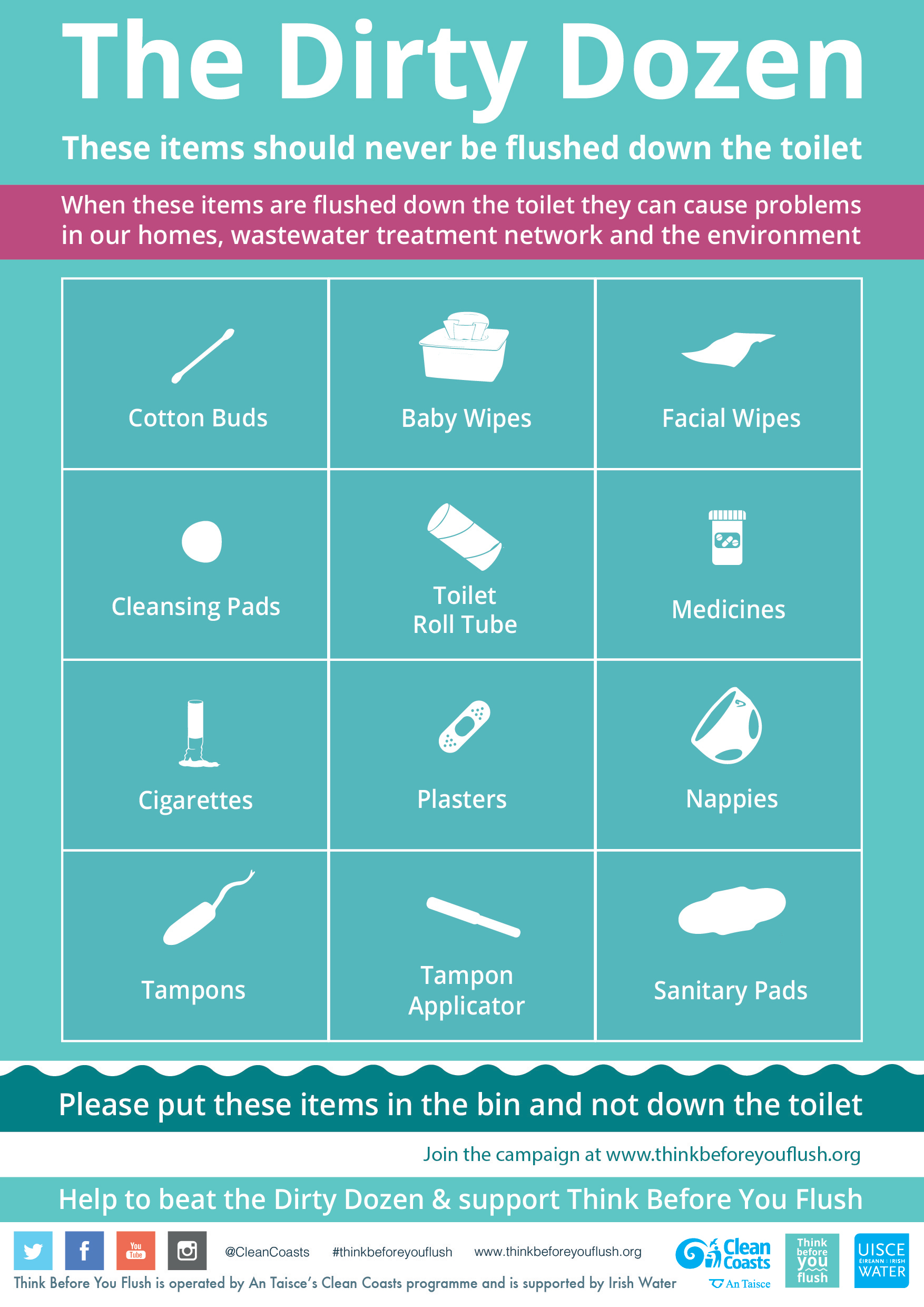
What ends up in our wastewater? Plenty of things that shouldn’t, so check out the dirty dozen of items that REALLY shouldn’t be flushed in the image below (which is not an exhaustive list). Have I ever seen this image in my life before? Big fat nope. There are always diagrams on regular trash cans about what you can and can’t throw in there, yet somehow, the most you see in a toilet is not to flush the feminine sanitary products (from a female’s point of view anyway, not sure what you guys see in the men’s toilets). Having this diagram in public toilets would be a great guide and deterrence for everyone to stop flushing crap.
In reality, wastewater is 99% water. The other 1% is the other crap we’ve chucked in it (the nicer word for this is constituents). Unfortunately, it’s scattered about and we can’t simply grab all of it at once and throw it out. These constituents can be separated into three general categories: physical, chemical and biological. Physical constituents are solids and can be anything from cigarettes to fruit skins, chemical constituents involve things like pharmaceuticals made up of chemicals which have dissolved into the water, whilst biological constituents include microorganisms like bacteria. And how do these things end up in the water in the first place? We humans either intentionally or unintentionally throw them in, flush and forget, out of sight, out of mind. This is exactly why I think we should be teaching our kids from a young age about what can be flushed and what can’t. The three P’s people.
Okay, so why the emphasis on all not flushing so much shit? Wastewater treatment essentially converts wastewater from a state of being totally unusable, to water that can be returned to the environment (with minor environmental impact) or recycled for another purpose, such as irrigation of sports grounds, garden watering and so on. The more crap that’s in our water, the harder it becomes to remove all of it and recycle the water. More energy and resources are then required to treat the wastewater. It’s also super important as clean water is important for the ecosystem, particularly the animals that choose to make the water their home, and also for the general health of humans. If wastewater isn’t properly cleaned, it can carry diseases. The aim is to have wastewater with the three P’s only, so that we can have clean water for all, tying back into the UN’s 17 Sustainable Development Goals (SDG), clean water and sanitation for all (SDG 6), which then also contributes to overall good health and well-being (SDG 3).
I think the key issue behind all of the crap that ends up in wastewater is the lack of education. What not to flush needs to be taught from the time that we are potty trained, all the way through school to emphasise why it is so important. We need to explain why it is so bad for the environment, and how much harder it is becoming to treat wastewater. I believe there should be more government funding for ads telling you what can’t be flushed and why, and that this acknowledgement will lead to a change in schools’ curriculum in the future, in a similar way that the plastic bag ban has become a huge thing in the past few years. I think social media influencers also need to jump on their game and use their platforms to educate on such important environmental issues and just forget about the social stigma that seems to exist. A greater wastewater education will not only help out with clean water and sanitation for all, it will also make a great start on quality education for all (SDG 4). If we can somehow put all these things together, then the world (and your toilets) will be a much cleaner place. #starttalkingdirty
Remember the three P’s guys. – Chloe
 There's Something in the Water